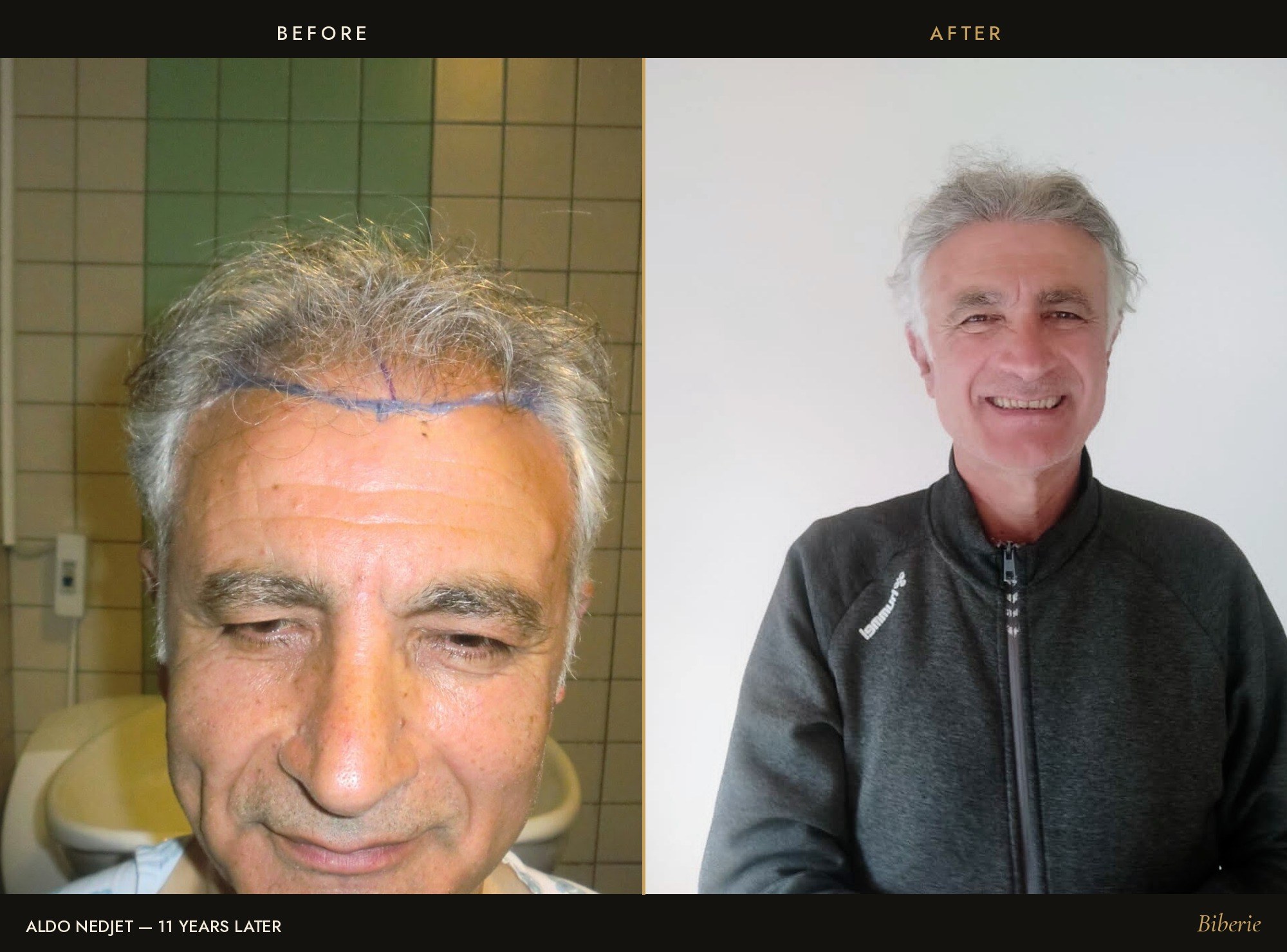
Before Biberie was a clinic, it was a personal problem I couldn't fix on my own. I lost hair early, the way a lot of men do — slowly enough that I could ignore it for years, and then suddenly not. By my forties I had a receding hairline and a thinning crown, and I had spent a long time avoiding mirrors, photographs, and anything involving wind.
Deciding was the hardest part
I looked into it for a long time before doing anything. I read about clinics, compared prices, talked myself out of it more than once. What finally pushed me wasn't vanity — it was tiredness. Tired of adjusting how I stood in photos. Tired of a decision that kept getting postponed to "next year."
In May 2015, I went ahead with it. I remember the morning clearly: sitting in a hospital gown while my hairline was marked out in blue pen, trying to look calm about a decision I had already made and could no longer take back.
What nobody tells you about being the patient
The procedure itself went the way it was supposed to — hours in a chair, a team working carefully, a strange new hairline staring back at me in the mirror afterward. What stayed with me wasn't the surgery. It was everything around it: figuring out logistics in an unfamiliar place, not always knowing who to ask when something worried me, managing recovery mostly on my own once the appointment was over.
None of it went badly. But I understood, as the patient, how much smoother the whole experience could be with the right person coordinating it — someone whose only job is making sure nothing falls through the cracks, medically or logistically.
Eleven years later
The photograph above is not a six-month result. It's eleven years later. The hair in that second photo is the same hair that grew in after that morning in 2015 — no touch-ups, no filters, just time. That permanence is the part people considering a transplant most want reassurance about, and it's the part I can speak to honestly, because I've lived with the result longer than most of our patients have been considering the decision.
Why that experience became Biberie
I didn't open Biberie because I'm a surgeon — I'm not one, and I don't perform procedures. I opened it because I know exactly what it feels like to be the person in the chair, far from home, hoping everyone around you knows what they're doing. That's the gap I coordinate for every patient who comes through Biberie: a single point of contact, from the first message to the follow-up months later, so nobody has to figure it out alone the way I largely did.
If you're where I was in 2015 — thinking about it, putting it off, unsure who to trust — I understand the hesitation better than most people you'll talk to about it. I'm happy to answer questions myself, patient to patient, any time.
— Aldo Nedjet